Dermatology clinics continue to adopt advanced technologies that allow more precise skin treatments with improved patient outcomes. One of the most important developments in aesthetic dermatology is pico laser technology. This system uses picosecond laser pulses to treat pigmentation disorders, tattoo ink, and various skin concerns while maintaining high treatment precision.
Clinics today must balance treatment effectiveness, patient safety, and operational efficiency. Pico laser systems help achieve this balance by offering controlled energy delivery, targeted pigment treatment, and shorter recovery periods for patients.
Across Saudi Arabia, many dermatology clinics work with specialized medical technology providers such as Aramed to access modern laser systems and clinical support for aesthetic dermatology treatments.
Understanding Pico Laser Technology in Dermatology
Pico laser systems deliver laser energy in picosecond pulses, which are extremely short bursts measured in trillionths of a second. This rapid energy delivery changes how the laser interacts with pigment particles in the skin.
Traditional laser systems rely heavily on heat to break down pigment. Pico laser devices create a strong mechanical impact that fragments pigment particles with high precision. The body then gradually removes these particles through natural metabolic processes.
This mechanism allows dermatologists to treat pigmentation while minimizing unnecessary thermal exposure to surrounding skin tissue.
Picosecond Pulse Technology
Picosecond pulse duration allows the laser energy to reach the target pigment extremely quickly. Because the energy is delivered in a very short time frame, the laser can disrupt pigment particles before heat spreads into surrounding tissue.
This improves treatment precision and allows dermatologists to treat delicate areas of the skin more safely.
Photoacoustic Effect in Pico Laser Treatments
The key mechanism behind pico laser treatments is the photoacoustic effect. Instead of relying mainly on thermal heat, the laser pulse generates a pressure wave that breaks pigment particles into microscopic fragments.
This process allows effective treatment of melanin and tattoo ink while maintaining controlled energy delivery within the skin.
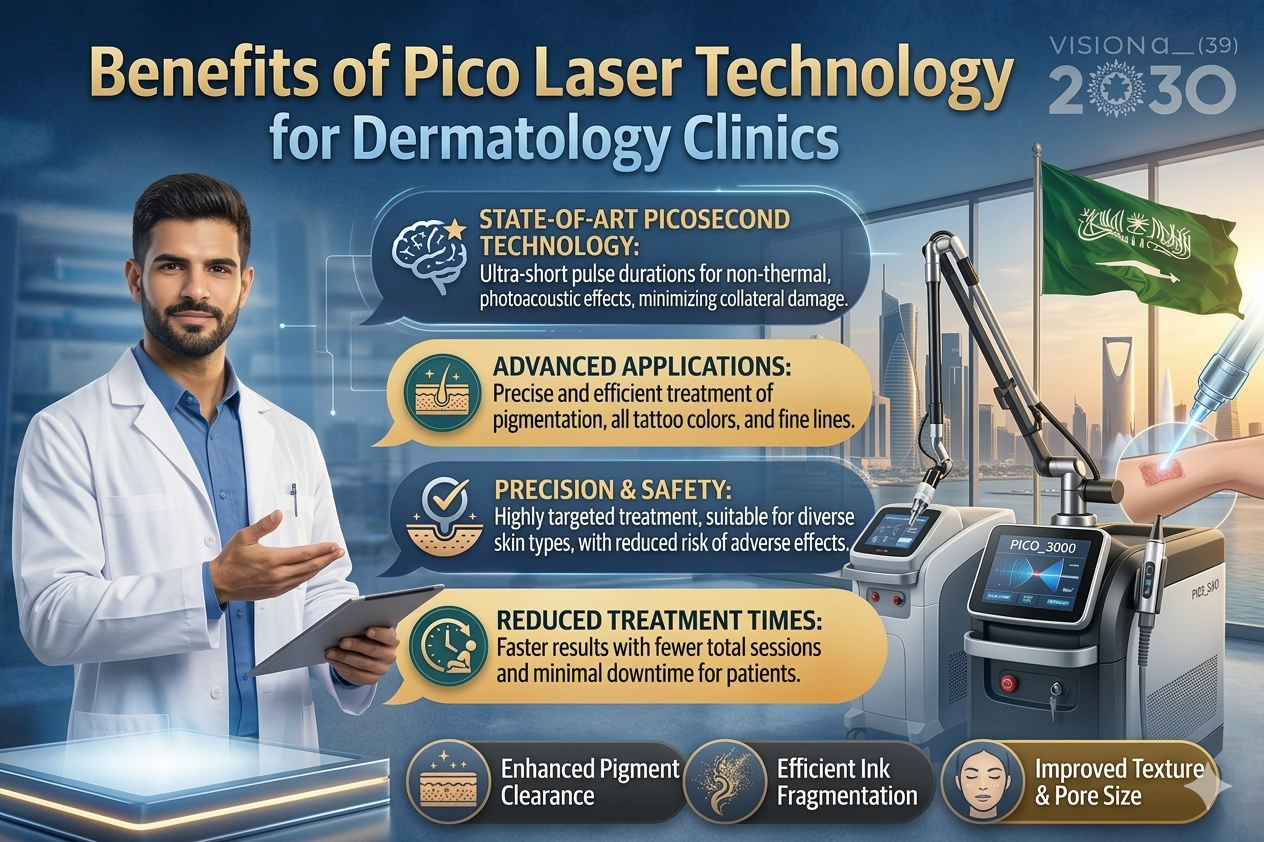
Key Benefits of Pico Laser Technology for Dermatology Clinics
Modern dermatology clinics evaluate laser technologies not only for treatment effectiveness but also for clinical workflow and patient experience. Pico laser systems provide several advantages in this context.
Precise Pigment Targeting
Pico laser devices are highly effective at targeting pigment particles such as melanin and tattoo ink. The laser energy fragments these particles into smaller pieces that can be naturally cleared by the body.
This precision allows dermatologists to treat conditions such as hyperpigmentation and tattoo ink with improved control.
Reduced Thermal Exposure to Skin
Because pico lasers deliver energy extremely quickly, the surrounding tissue experiences less thermal spread. This controlled energy delivery reduces the risk of heat related skin damage during treatment.
Treatment Versatility
Pico laser technology supports multiple dermatology applications. Clinics can use these systems to address a variety of skin concerns within a single platform.
Common treatment indications include:
- Hyperpigmentation
- Melasma
- Tattoo removal
- Acne scars
- Skin rejuvenation
- Uneven skin tone
This versatility allows clinics to offer broader treatment options to patients.
Improved Patient Experience
Patients increasingly prefer procedures that provide visible results while minimizing downtime. Pico laser treatments often involve shorter recovery periods compared with some traditional skin resurfacing procedures.
For clinics, this helps improve patient satisfaction and treatment acceptance.
Long Term Clinical Value for Clinics
Investing in advanced laser technology allows dermatology clinics to expand their treatment capabilities and respond to growing demand for aesthetic procedures.
Clinics often evaluate factors such as device performance, clinical training, and technical support before selecting a laser system. Many clinics in Saudi Arabia work with medical distributors such as Aramed, which supports dermatology centers with modern laser technology and professional training.
Clinical Applications of Pico Laser Technology
Pico laser systems are used in several dermatology procedures that require precise pigment targeting.
Treatment of Hyperpigmentation
Hyperpigmentation occurs when excess melanin accumulates in certain areas of the skin. Pico laser pulses break down these pigment clusters, allowing gradual fading of dark spots.
Melasma Management
Melasma is a complex pigmentation disorder often triggered by hormonal changes and sun exposure. Pico laser treatments may help reduce pigment intensity when used as part of a dermatology treatment plan.
Laser Tattoo Removal
Tattoo removal is one of the most common applications of picosecond laser technology. Tattoo ink particles are dense and difficult for the body to remove naturally.
Pico laser pulses fragment these particles into very small pieces, which allows the body to gradually clear them over several treatment sessions.
Skin Rejuvenation and Collagen Support
Some pico laser procedures stimulate collagen activity within the skin. This process may help improve skin texture and reduce the appearance of mild acne scars.
Why Dermatology Clinics Are Investing in Pico Laser Systems
The demand for aesthetic dermatology treatments continues to grow globally and across Saudi Arabia. Clinics must adopt technologies that support both clinical performance and patient expectations.
Rising Demand for Non Surgical Treatments
Many patients prefer non invasive skin treatments that do not require surgical procedures. Laser technologies allow dermatologists to address pigmentation and skin concerns using controlled energy based treatments.
Technology Driven Dermatology Practices
Modern dermatology clinics invest in advanced devices to maintain high treatment standards and offer updated aesthetic procedures.
Training and Technical Support
Using advanced laser systems requires proper clinical training and technical guidance. Many clinics collaborate with experienced medical technology providers such as Aramed, which supplies aesthetic laser devices and supports clinics with training and implementation support.
Considerations Before Choosing a Pico Laser Device
Before investing in a laser platform, dermatology clinics typically evaluate several technical and clinical factors.
Pulse Duration and Energy Delivery
True picosecond pulse duration is essential for achieving the desired photoacoustic effect. Clinics often review device specifications to ensure consistent energy delivery.
Medical Device Certification
Medical laser systems must meet regulatory standards and safety certifications before being used in dermatology practice.
Clinical Training and Implementation
Training ensures that dermatologists and clinical staff understand treatment parameters, safety protocols, and device operation.
The Future of Pico Laser Technology in Dermatology
Pico laser technology improves how dermatologists treat pigmentation and tattoo ink. As research and device engineering continue to evolve, dermatology clinics will gain access to even more precise treatment systems.
With modern devices, professional expertise, and collaboration with trusted medical technology providers such as Aramed, dermatology clinics can continue to deliver safe and effective treatments for pigmentation, tattoo removal, and skin rejuvenation.
Advanced laser technologies will likely remain a central part of aesthetic dermatology as clinics respond to increasing patient demand for precise and minimally invasive treatments.
Frequently Asked Questions
What are the main benefits of pico laser technology
Pico laser technology offers precise pigment targeting, reduced thermal exposure to surrounding skin, and shorter recovery time for patients. These benefits make it suitable for treating conditions such as hyperpigmentation, melasma, tattoo ink, and acne scars in dermatology clinics.
Why do dermatology clinics prefer pico laser systems
Dermatology clinics prefer pico laser systems because picosecond pulses break pigment particles more efficiently than many traditional laser technologies. This allows controlled treatments with improved precision and minimal heat impact on surrounding tissue.
What skin conditions can be treated with pico laser technology
Pico laser technology is commonly used to treat hyperpigmentation, melasma, tattoo removal, acne scars, uneven skin tone, and certain skin texture concerns. Dermatologists may also use pico lasers as part of skin rejuvenation procedures.
How does pico laser technology break down pigment
Pico laser systems use extremely short laser pulses that create a photoacoustic effect. This effect breaks pigment particles such as melanin or tattoo ink into very small fragments. The body gradually removes these fragments through natural biological processes.
Is pico laser technology safe for dermatology treatments
Pico laser technology is considered safe when used by trained dermatology professionals with certified medical devices. Proper patient evaluation, correct treatment parameters, and professional training are important for safe treatment outcomes.
Why do dermatology clinics invest in advanced laser technology
Dermatology clinics invest in advanced laser systems to expand treatment options, improve clinical outcomes, and respond to patient demand for non invasive skin treatments. Many clinics work with medical technology providers such as Aramed to access modern aesthetic laser devices and professional training.
What factors should clinics consider before choosing a pico laser device
Clinics usually evaluate pulse duration, device safety certifications, treatment versatility, and technical support before selecting a pico laser system. Access to training and clinical guidance from experienced medical suppliers such as Aramed is also an important factor for many dermatology clinics.