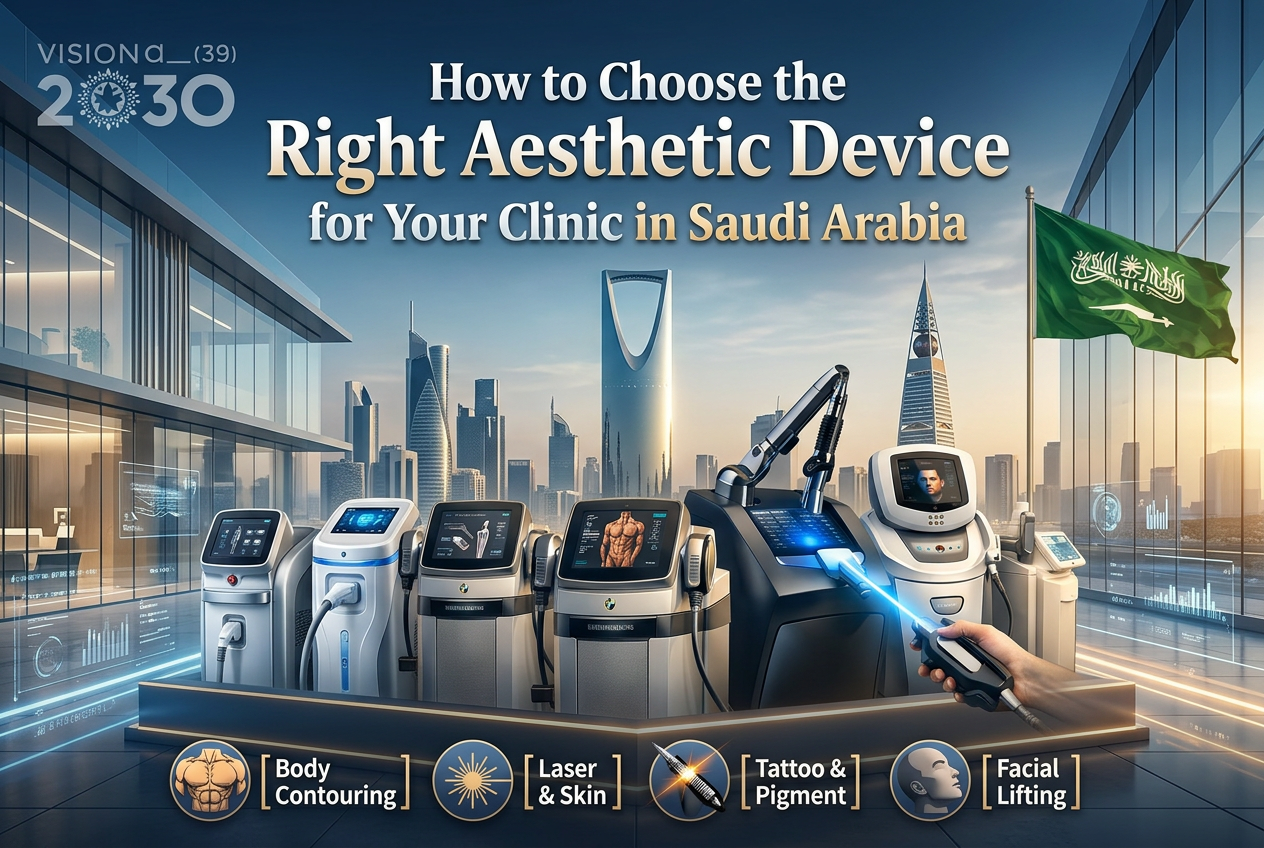
Choosing the right aesthetic device is one of the most important investment decisions a clinic owner in Saudi Arabia will make.
The Saudi aesthetic market is growing rapidly. Competition in Riyadh, Jeddah, and the Eastern Province is increasing. Patients are more informed. Downtime tolerance is lower. Expectations for visible results are higher.
Yet many clinics still purchase devices based on exhibition offers, brand hype, or competitor pressure.
If you are planning to expand or upgrade your clinic, this guide will help you choose the right aesthetic device in Saudi Arabia that supports your clinical goals and long-term profitability.
1. Start with Your Clinic Strategy, Not the Device
Before selecting medical devices for clinics, you must define your treatment direction.
Ask yourself:
- Are you focused on hair removal volume?
- Do you want to dominate melasma and pigmentation cases?
- Are you expanding into acne scar resurfacing?
- Are you building a premium anti-aging portfolio?
- Or are you aiming for a multi-service platform approach?
Aesthetic equipment selection in KSA should align with your clinic’s core positioning.
For example:
A high-volume laser hair removal clinic needs speed, spot size efficiency, and patient comfort.
A dermatology-focused clinic dealing with pigmentation and acne scars requires precision, wavelength versatility, and strong pigment safety.
A clinic in an upscale district may prioritize advanced resurfacing technologies with visible skin remodeling results.
Without strategic clarity, even the best device can become underutilized.
2. Understand Saudi Patient Demographics
Skin Types IV–V Are Common in KSA
In Saudi Arabia, Fitzpatrick skin types IV and V are highly prevalent. This changes everything.
Higher melanin levels increase the risk of:
- Post-inflammatory hyperpigmentation (PIH)
- Uneven pigmentation after aggressive treatments
- Thermal injury if energy parameters are poorly controlled
This means pigment safety is not optional. It is essential.
When choosing an aesthetic device for your clinic in Saudi Arabia, make sure it offers:
- Adjustable pulse duration
- Controlled fluence
- Wavelength flexibility
- Safe protocols for darker skin types
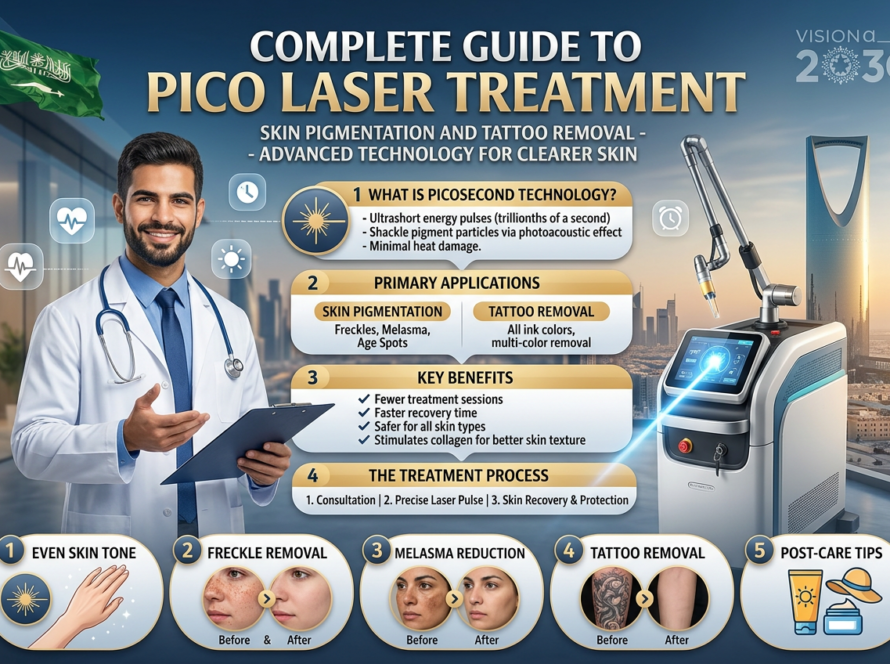
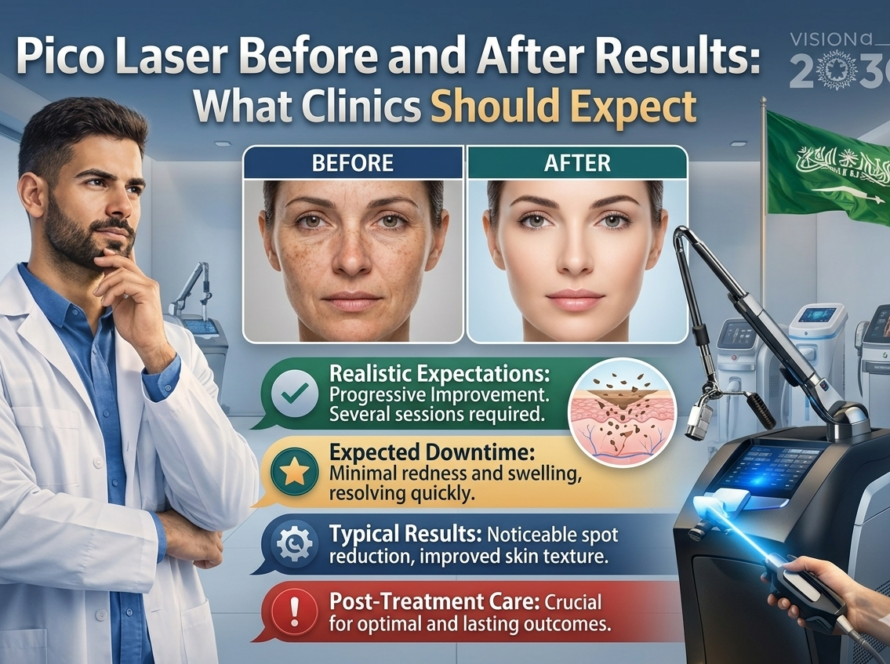
For pigmentation and melasma cases, platforms such as picosecond lasers are often considered due to their ability to target pigment with reduced thermal damage. Clinics exploring this segment can review advanced pico laser technologies such as those discussed in our insights on Saudi pigmentation trends.
Downtime also matters. Many Saudi patients prefer treatments with minimal recovery time, especially outside the winter season.
3. Evaluate Technology, Not Just Brand Reputation
Brand recognition can influence confidence, but it does not automatically guarantee that a device fits your clinic’s clinical goals or patient demographic.
In Saudi Arabia, technology suitability matters more than brand popularity. The right system should match your treatment demand, skin type profile, and long-term expansion plan.
Platform vs Single-Indication Device
Clinics generally choose between two investment approaches.
A single-function device is designed to treat one primary indication. For example, a dedicated hair removal laser or a standalone CO₂ resurfacing system. These devices are often powerful within their niche and can be ideal for clinics with a focused service model.
A multi-application platform, on the other hand, supports multiple wavelengths or treatment categories within one system. These platforms allow clinics to treat several indications using a single technology base.
Depending on the configuration, multi-platform systems may support:
- Hair removal
- Pigmentation treatment
- Vascular therapy
- Skin rejuvenation
The advantage of a platform system is service diversification. A clinic can expand its treatment menu without purchasing multiple standalone devices. This often improves long-term return on investment.
However, the decision should not be based only on versatility. Clinics must evaluate whether the technology depth within each indication meets clinical expectations.
The right choice depends on your clinic strategy. A specialized clinic may benefit from a focused device. A growing clinic aiming for treatment expansion may benefit from a flexible platform.
4. Non-Ablative vs Ablative Systems in the Saudi Market
One major decision clinics face is whether to invest in ablative CO2 systems or non-ablative technologies.
Ablative CO2 lasers provide strong resurfacing and scar remodeling but often require downtime.
Non-ablative systems stimulate collagen with shorter recovery periods.
In Saudi Arabia:
- Patients often prefer reduced downtime.
- Ramadan season affects scheduling.
- Winter months see increased resurfacing demand.
We explored this shift in depth in our article on why non-ablative laser treatments are replacing traditional resurfacing in KSA.
Your device choice should consider seasonal demand and patient expectations, not only clinical power.
5. Calculate ROI Before You Buy
Aesthetic equipment selection in KSA must always include financial modeling. Many clinics focus on the purchase price alone, but the real question is total cost of ownership and long-term revenue impact.
Before signing any agreement, calculate how the device will perform financially in your specific market.
Start by evaluating:
- The average session price in your city
- Expected monthly treatment volume
- Maintenance and service contract costs
- Consumables, if required
- Marketing investment needed to launch the treatment
Some devices rely heavily on consumables. While this may not seem significant initially, recurring costs can reduce long-term margins. In contrast, platforms with minimal consumable dependency may offer stronger profitability over time.
Next, calculate your break-even point.
Estimate:
- Monthly projected revenue
- Fixed and variable costs
- Time required to reach full utilization
For example, a high-speed hair removal platform with a larger spot size can increase daily patient throughput. More patients per day often translate into more stable monthly revenue.
Similarly, a multi-application platform can diversify income sources. Instead of depending on one treatment category, your clinic can generate revenue from hair removal, pigmentation, vascular treatments, or skin rejuvenation within the same system.
Financial clarity before purchase reduces risk after purchase.
The right device should support both clinical performance and predictable profitability.
6. Consider Local Market Trends in Saudi Arabia
Saudi aesthetic demand is evolving. Male aesthetics is growing significantly, particularly in Riyadh and Jeddah. Beard shaping, skin rejuvenation, and pigmentation correction are increasing among male patients.
We covered this expansion in our analysis of male aesthetics market trends in Saudi Arabia.
If your clinic plans to target male patients, device versatility becomes important. Technologies that address:
- Pigmentation
- Acne scars
- Vascular redness
- Skin tightening
may support broader service positioning.
Trend awareness should influence your technology roadmap.
7. Technical Support and Distributor Capability Matter
Even the most advanced device fails without proper support. Before finalizing your aesthetic device selection in KSA, evaluate the distributor carefully.
Ask:
- Are there local biomedical engineers?
- Is spare part availability confirmed?
- What is the service response timeline?
- Is structured clinical training provided?
- Is there ongoing protocol guidance?
Device uptime directly impacts clinic revenue.
If you are unsure how to evaluate a distributor, review our detailed guide on how to choose a medical device distributor in Saudi Arabia.
Clinics across the Kingdom increasingly work with structured distributors such as ARAMED, who support aesthetic and medical technologies with local teams and market familiarity. A local presence reduces downtime and strengthens clinical confidence.
8. Regulatory and SFDA Compliance Considerations
Every aesthetic device in Saudi Arabia must comply with SFDA regulations.
This includes:
- Proper device registration
- Documentation availability
- Traceability
- Compliance with post-market requirements
Failure to verify compliance may create inspection risk.
If you need a deeper understanding of regulatory responsibilities, read our guide on SFDA compliance for medical aesthetic devices in Saudi Arabia.
Regulatory clarity protects your clinic long term.
9. Common Mistakes Clinics Make When Selecting Devices
Based on market observation, common mistakes include:
- Buying based on exhibition discounts
- Choosing technology beyond team skill level
- Ignoring patient skin type profile
- Over-investing in a single indication
- Underestimating maintenance requirements
- Failing to calculate realistic ROI
Device selection is not about prestige. It is about alignment.
10. Decision Checklist Before Finalizing Your Purchase
Before you sign any agreement, confirm:
Clinical Fit
Does the device match your top 3 revenue treatments?
Patient Demographics
Is it safe for Fitzpatrick IV–V skin?
Technology Suitability
Does it offer adjustable parameters and protocol flexibility?
Financial Modeling
Have you calculated break-even realistically?
Technical Support
Is local engineering available?
Regulatory Compliance
Is the device properly registered?
Long-Term Strategy
Does it support future service expansion?
Clear answers prevent expensive mistakes.
Conclusion
Choosing the right aesthetic device in Saudi Arabia is a strategic decision that impacts clinical performance, regulatory safety, and long-term profitability.
The Saudi market is competitive. Patients are informed. Standards are rising.
Clinics that succeed are those that align technology with:
- Patient demographics
- Treatment demand
- Downtime expectations
- Regulatory clarity
- Reliable technical support
Structured distributors operating in the Saudi market, including ARAMED, work closely with clinics to align aesthetic device selection with real clinical and operational goals.
FAQs
1. How do you choose the right aesthetic device in Saudi Arabia?
To choose aesthetic device Saudi Arabia clinics can benefit from, evaluate clinical indications, patient skin types, downtime expectations, ROI, regulatory compliance, and local technical support before purchasing.
2. What factors matter most when selecting medical devices for clinics?
Key factors include treatment demand, Fitzpatrick skin types IV–V safety, device versatility, maintenance costs, service support, and compliance with SFDA regulations.
3. Why is skin type important in aesthetic equipment selection in KSA?
Saudi patients commonly have Fitzpatrick IV–V skin types, which carry higher risk of post-inflammatory hyperpigmentation. Devices must allow precise energy control and pigment-safe protocols.
4. Should clinics choose multi-platform or single-function aesthetic devices?
Multi-platform systems allow treatment diversification and better ROI, while single-function devices suit focused clinics. The right choice depends on the clinic’s service strategy and patient demand.
5. How can a clinic calculate ROI before buying an aesthetic device?
Clinics should calculate session pricing, expected monthly volume, maintenance cost, consumables, and break-even period to determine long-term profitability before investment.
6. Why is local technical support important in Saudi Arabia?
Local engineers reduce downtime, ensure correct installation, and maintain device performance. Distributors operating in Saudi Arabia, including ARAMED, support clinics with on-ground technical teams.
7. What regulatory checks should be done before purchasing an aesthetic device in KSA?
Clinics should verify SFDA registration, proper documentation, traceability systems, and compliance with post-market surveillance requirements to avoid regulatory risk.